


What Is a FORTIFIED Roof in Maine?
A FORTIFIED roof is a roofing system built to enhanced construction standards developed by the Insurance Institute for Business & Home Safety (IBHS). These standards are designed to improve a home’s resistance to wind-driven rain, high winds, and severe weather events.
Unlike a standard roof replacement, a FORTIFIED roof includes specific installation methods, upgraded fastening requirements, and a sealed roof deck system that reduces the likelihood of catastrophic water intrusion if shingles are damaged during a storm.
For homeowners applying through the Maine Home Resiliency Program, FORTIFIED standards are required.
Who Developed the FORTIFIED Standard?

The FORTIFIED standard was developed by IBHS, a nonprofit research organization supported by the insurance industry. The standard is based on laboratory testing and real-world storm performance data.
The program requires:
Specific material installation methods
Documentation throughout the build process
Third-party verification by a certified evaluator
This is not simply a marketing designation, it is a verified construction standard.
Key Components of a FORTIFIED Roof
STRONGER EDGES
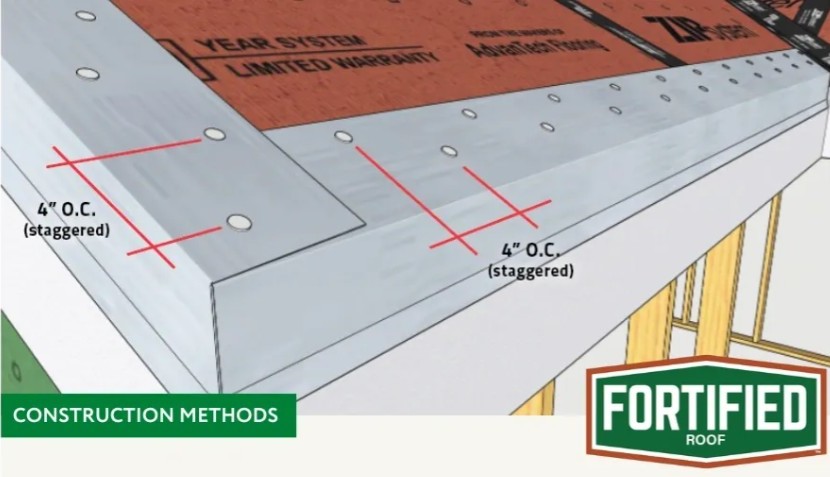
Most roof wind damage begins at the edges. Strong gusts can lift the roof's outer edge, peeling back the covering. This is why the FORTIFIED standard stresses secure roof edges.
To meet the FORTIFIED Roof standard:
A wider-than-normal metal drip edge is installed along all edges of the roof.
The starter strip beneath shingles must be fully adhered to the deck.
These materials must be installed correctly to resist wind uplift and prevent wind from entering the roofing system.
SEALED ROOF DECK
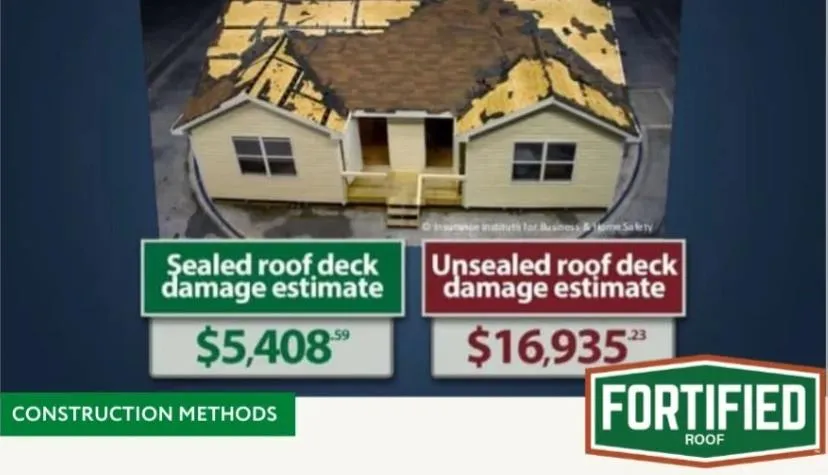
In standard construction, if wind removes shingles or metal panels, exposed wood decking lets water seep in, damaging insulation, drywall, electrical systems, and belongings, resulting in costly interior damage.
To meet the FORTIFIED Roof standard:
Applying a sealed underlayment
Taping or sealing the seams between plywood or OSB roof panels.
BETTER ATTACHMENT
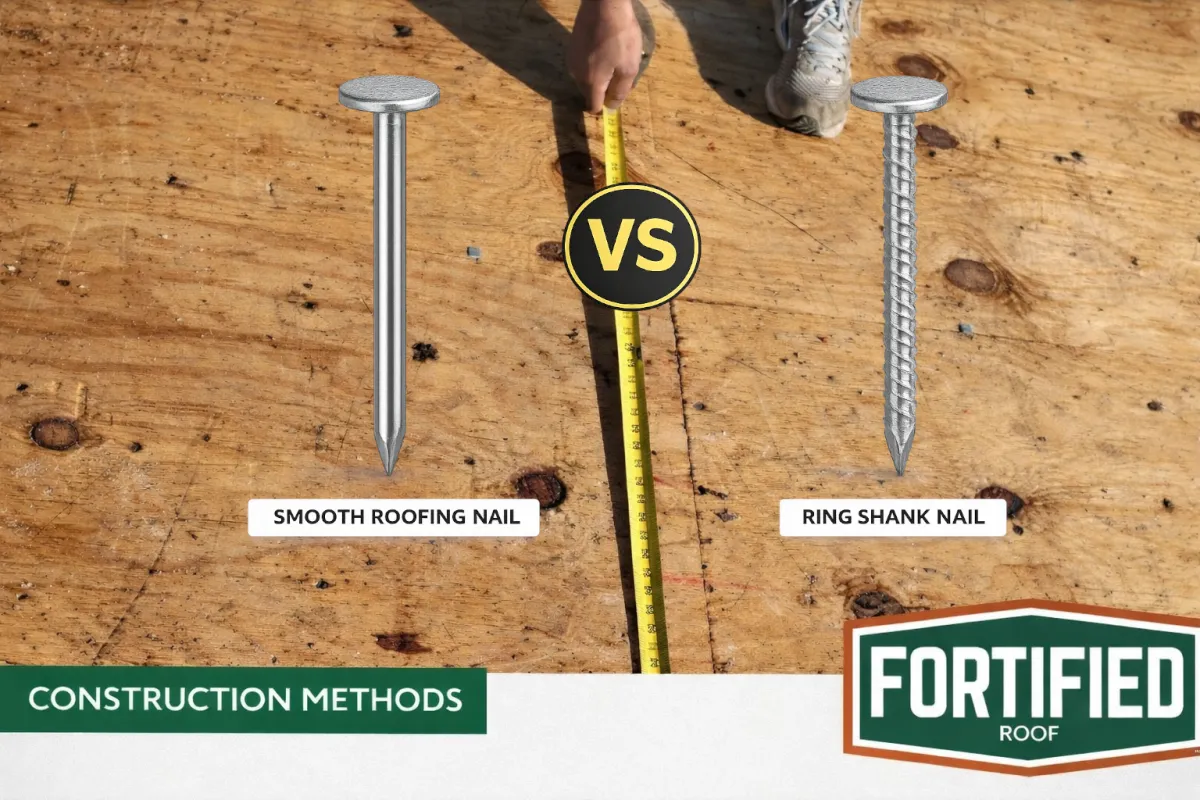
Traditional roofs use smooth nails to secure the roof deck to the structure. However, in high winds, these nails can loosen or pull out, causing the deck to lift.
To meet the FORTIFIED Roof standard:
FORTIFIED roofs use ring-shank nails for a tighter grip. Installed in a specific pattern, they nearly double uplift resistance.
Why FORTIFIED Roofing Matters in Maine

Maine homes are exposed to:
Nor’easters
Wind-driven rain
Coastal storm systems
Heavy snow loads
Freeze-thaw cycles
A FORTIFIED roof system is designed to reduce the likelihood of:
Shingle blow-off
Deck water intrusion
Structural damage from wind uplift
For homeowners participating in the Fortify Maine Home Resiliency Program, meeting FORTIFIED standards is typically required for grant eligibility.
Does a FORTIFIED Roof Lower Insurance?
Some insurance carriers may offer premium incentives for homes that achieve FORTIFIED designation. Incentives vary by carrier and policy.
Homeowners should confirm eligibility directly with their insurance provider.
Is Every Roof Eligible to Be FORTIFIED?
Not all roof systems qualify automatically. Eligibility depends on:
Deck condition
Structural integrity
Ability to meet IBHS installation standards
A certified contractor and evaluator can determine feasibility before installation begins.
Learn more about Maine roofing grant eligibility requirements.
🔒No contact info required to see eligibility
Frequently Asked Questions About FORTIFIED Roofs in Maine
What is a FORTIFIED roof?
A FORTIFIED roof is a roofing system installed to enhanced standards developed by the Insurance Institute for Business & Home Safety (IBHS). It focuses on reducing storm damage, especially from wind-driven rain and shingle loss through upgraded installation methods and verification.
What makes a FORTIFIED roof different from a standard roof replacement?
A standard roof replacement generally follows manufacturer installation instructions. A FORTIFIED roof includes additional requirements such as a sealed roof deck, enhanced attachment methods, reinforced roof edges, and third-party verification to confirm the system meets the standard.
What is a sealed roof deck and why does it matter?
A sealed roof deck typically involves taping or sealing the seams between roof sheathing panels. If shingles are damaged or blown off during a storm, the sealed deck helps prevent water from entering the home.
Do I need a special contractor or inspector for FORTIFIED?
Yes. FORTIFIED projects generally require documentation and verification. The contractor should be certified as a FORTIFIED roofer
Does a FORTIFIED roof lower homeowners insurance in Maine?
Some insurance carriers may offer incentives for FORTIFIED designations, but it varies by carrier and policy. Homeowners should confirm details directly with their insurance provider.
Can any home in Maine get a FORTIFIED roof?
Most homes can be upgraded, but feasibility depends on factors like roof design, deck condition, and the ability to meet the standard’s installation and verification requirements.
Currently only homes located in York, Cumberland, Kennebec, and Penobscot counties will qualify for state grants when installing a FORTIFIED roof.
Does participating lower my homeowners insurance?
Some insurance carriers may offer premium incentives for homes built or upgraded to FORTIFIED standards. Insurance impact varies by carrier and policy, but storm-resilient upgrades can reduce long-term risk exposure.
When does funding run out?
Funding is limited and may close once allocation caps are reached. Because of high demand and phased rollouts, early eligibility confirmation is recommended.


QUICK LINKS
CONTACT INFORMATION

MaineHomeResilience.com is an independently operated informational website and is not affiliated with or endorsed by the State of Maine or any government agency. Program details, eligibility requirements, and funding availability are subject to change.
Copyright 2026 Maine Home Resilience All Rights Reserved